You may not have seen this recently, but Tucker Carlson – who seems to be doing a sort of non-apology tour where he non-apologises for his role in getting Trump elected – did an interview with Jacob Rees-Mogg. Everything you need to know about the interviewee is sort of in the name; Rees-Mogg (RM) is a Tory former Member of Parliament (UK), and one of the key voices within the party that campaigned for Brexit in the first place. Trace his lineage, and you will find the impeccable aristocratic pedigree that befits his name, ideology and manner of speech.
You can probably find a summary of the video elsewhere, or you can actually watch it like I did if you care about any of these things. To condense a long and rather fruitless conversation, Carlson from the outset frames RM as a sort of half-warmonger who is participating in a war against Russia that it cannot win. You should remember that the interview for which Carlson is most well-known is the one with Vladimir Putin, in which he sat there for an hour like a good boy while Putin rattled off a slightly misshapen view of the entire history of the Russian people. At the time, one of Putin’s comments that I found the funniest was that Poland had collaborated with Nazi Germany to carve up Czechoslovakia, and therefore absolutely deserved to fall prey to the Nazis. Somehow, in the course of this interview, Carlson has managed to step on the toes of the Poles yet again by (1) agreeing with Hitler that 15% of Poland was rightfully German, and (2) questioning why the UK had to “attack” Nazi Germany on behalf of Poland.
Nevertheless, I think there is something interesting to be gleaned from the discussion between RM and Carlson. You see, taking aside the liberties with the facts that Carlson took and the sometimes polemical sides of RM coming out, their positions are broadly sensible and simultaneously true and touch on one of the most intractable issues with war. This is despite most of the media pickup and commentary I’ve seen on this interview being very precisely designed to drive you into a rage, including the very title of the interview. Let me attempt to actually summarise the substantive core of their arguments to illustrate.
Jacob Rees-Mogg essentially argues that the UK must jack up its defence spending in order to form a credible conventional deterrent against Russia. It needs this deterrent because a nuclear deterrent is not enough; he argues that if a country’s only available threat is to press the button, nobody will respect its threats because it’s hardly a proportionate response to anything issue that is not existential to the nation. Furthermore, this entire deterrent strategy is necessary because of the fundamental interest of the UK in maintaining the principle of territorial integrity as a core pillar to the Westphalian system of nation-states. RM argues that the UK does not get into wars when it is perceived as strong, and accidentally lands in wars via its guarantees to allies when foreign powers perceive their guarantees as non-credible. Thus, facing an aggressive Russia, the best response is to rearm as quickly as possible.
Carlson argues that war bears a terrible human cost and thus must be avoided at all, well, costs. Being that a government’s first priority is to its people, it should not employ its military in anything that is not in its direct self-interest. He extends this argument to condemn, on Christian moral principles (under which he also indicts RM), the slaying of innocents in Gaza, as well as the use of the atomic bomb on Hiroshima and Nagasaki (which RM defends).
Do you see the issue with this entire farce of a debate? Neither of these views are actually very mutually exclusive; they both focus on a different layer of the complex phenomenon that war is. You can, if you want, boil down inter-state organised violence to the simple view of human suffering and the physical/spiritual costs of conflict. Many a great work has been written on this, the part of war that breaks you inside. Hell, I wrote a bad essay on this a while back. The follies of youth. The clanker could probably do better.
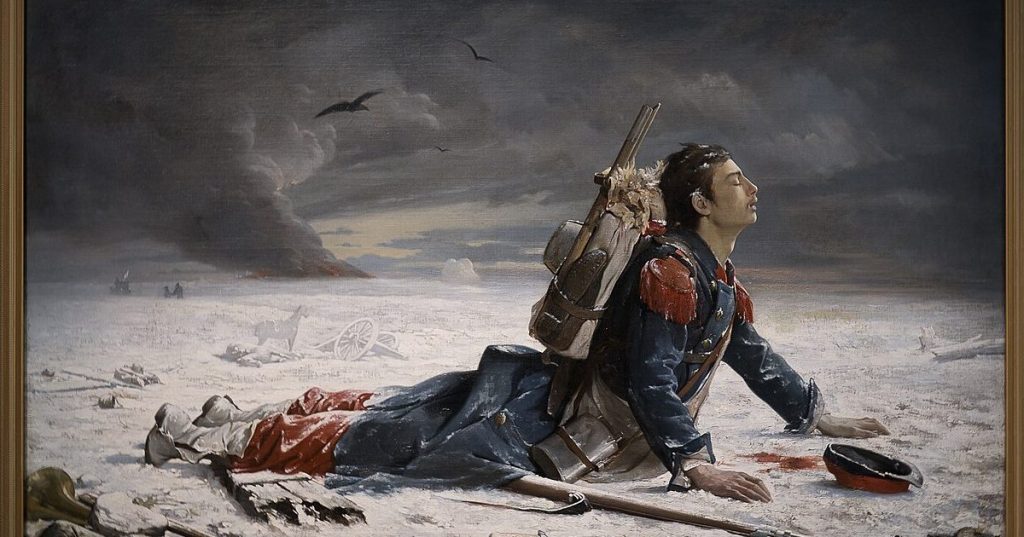
Every now and then, a video emerges onto my timeline from the depths of the purgatory that is Twitter showing drone footage out of the Russian war of aggression on Ukraine. There are some drone strikes which are executed against legitimate targets mid-combat, like enemy trenches or tanks, but there are also those that hover mockingly over their defeated, sometimes wounded enemy before closing in. The last frame seen before the video ends varies by how the target chooses to respond to it. Panic, arms flailing, attempting to run away from the drone. A dejected look of resignation on a face that momentarily turns away in raw instinct at the final moment. Every so often, a drone will instead leave, and return with supplies bundled together in a piece of paper (presumably asking the enemy combatant to surrender), and then lead them towards friendly lines. But these are few and far between; the pockmarked face in horror by far outnumbers the other case.
On an individual level, war is one of the greatest tragedies in human existence. And yet, it is fought. Must it be fought? At an abstract level, perhaps not, but alas; we are beings of meat and flesh. Nobody (to a rounding error) wants to die. My generation, and those after me, have been subjected to stories of how the experience of participating in a war leaves you sad and broken. We all remember the line from Horace, “Dulce et decorum est / Pro patria mori”1, but never in its original context; only in that of Wilfred Owen calling it a lie. My favourite war stories are not those that end in a large hurrah, but those that end in absolute desolation and with nothing, if anything, having been gained – Generation Kill by HBO, Generation War by ZDF, and so on. You’ve probably seen Full Metal Jacket at least, but I don’t find that very convincing.
What does this tell us about how to avoid war? Very little, if anything at all. Can we avoid war? The study of why war happens, which is central to the field of international relations, is explicitly in service of how to avoid war at a macro scale. War does not necessarily depend on the hatred that the soldiers on the ground feel for one another; they are the result of massive machineries of state clashing against each other in a contest for resources, land, prestige, security, any number of things. RM’s argument is entirely in line with conventional (read: realist) thinking on international relations and security. In fact, his assessment pretty much entirely concurs with B. H. Liddell Hart, who wrote in 1960:
It thus becomes clearer than ever that the only protection of the Western countries lies in deterring the Russians from launching an attack—by being able to retaliate with H-bombs. But it must again be emphasised that, whatever the value of such a power as a deterrent to enemy attack, it is of no real value as a defence. For if it were used it would merely result in mutual suicide. That would be the inevitable outcome of war with H-bombs.2
RM makes this argument fully in the interview. Were the nuclear arsenal all that the UK and NATO had to offer in resistance to Russian aggression, it would only tempt the Russians to test the waters more. Would NATO launch full nuclear war for a border clash between Belarus and Poland? That’s not very likely. What about between Russia and the Baltic states? What about a clash between the Russian exclave of Kaliningrad and Poland? What about submarine attacks in the North Sea? Nuclear warfare is, for the reasonable, to be reserved for existential threats. At what point in a Russian operation against Europe does it become sufficiently existential to authorize the usage of nuclear weapons? And suppose then that madman Trump is willing to use a tactical nuclear weapon against invading Russian forces. Will the European countries brook its deployment on EU territory? Will Russia sit idly by and permit its forces to be tactically nuked without doing a little tactical nuking back? At what point in the ladder of escalation is it natural to stop?
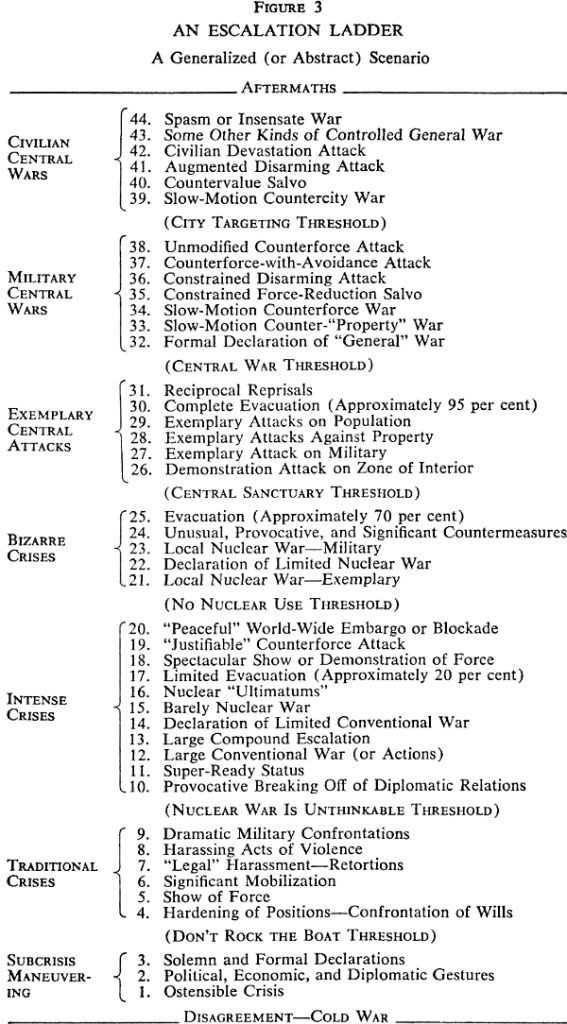
RM points out – rightly, in my view – that if the only choices available to European leaders are full capitulation or full nuclear war, the latter will only be invoked in a sufficiently serious situation. Thus, they are free to take gains piece by piece, for on each individual issue the Europeans will capitulate. To this, Carlson argues: how is this any of the business of the UK? RM responds: it is the business of the UK because the stability of Europe is, and has historically been, beneficial to all nations on the European continent, including the UK. I do, obviously, in this case favour Rees-Mogg’s case, but whether because he didn’t manage to catch it in the moment or because Carlson gish-galloped him with a barrage of claims, he was unable to satisfactorily state why Carlson’s position actually led directly into his own. I make this case here on his behalf. War must be prepared for precisely because it is so terrible. This much has been stated in ages past: si vis pacem, para bellum3.
The outcome of this discussion is particularly key in Europe’s current defence climate. A war is happening on Europe’s doorstep, and the old enemy of NATO has returned with a vengeance. If you transpose this argument from Britain’s defence policy to the question of whether the West should continue its support of Ukraine, the utility of the humanitarian framing becomes apparent in the narrative which casts the weapons being delivered to Ukraine as “enabling” it to send its own citizens to death, as “prolonging” the suffering. At whose hands? Who can say.
If you know me personally, you’ll know I’ve been a hardline proponent of the West rearming since Russia first flirted with the Donbass in 2014. Today, the situation is much more dire than back then in every way. Russian activity transformed from hybrid operations and supporting dumb local separatists then to a full-scale invasion in 2022, while Europe’s focus is being pulled away by a rogue US and a rising China. I could be accused, as someone who would most likely be a non-combatant, of effectively pulling something akin to the White Feather Campaign in WW1 wherein women would shame men into enlisting. All I can say is that I wish the world were one where war were not a looming possibility – nevertheless, society must continue for the sake of its survival to continue putting its men on the front lines. The least that can be done is to ensure that they are well-supported logistically and technologically on the battlefield, and are honoured back home for their efforts.
All of which is to say: taking aside Tucker Carlson’s intentional obfuscation of the very clear argument that Jacob Rees-Mogg makes, what he says is actually rather reasonable for someone to say. I may even agree with him. This has nothing to do with Rees-Mogg’s argument, and this quality of ships passing in the night is very heavily reflective of a part of modern discourse that I hate – and unlike Carlson’s deliberate confusion, I think many people who participate in modern discourse fail to clarify their own preoccupations, which are just as important as one’s own preconceptions, while engaging with the other. There are objections to the call for rearmament that argue in the same plane of reality – on increasing procurement efficiency, on ensuring any country does not bear an outsized burden, on ensuring it is non-escalatory, and so on.
I don’t know how to end off this reflection other than by endeavouring myself, and begging others, to be much more clear about these before getting into a fruitless argument that only serves to inflame discourse.

